| Genre | Open-world • Survival • Adventure |
| Title | Balatro |
| Legacy | Influential milestone in open-world and morally complex game design, developed a devoted cult following |
| Setting | Post-nuclear apocalypse |
| Developer | Nighthawk Interactive |
| Protagonist | Morally ambiguous |
| Release year | 1991 |
| Gameplay elements | First-person shooter • RPG • Environmental storytelling |
| Critical reception | Acclaimed for immersive worldbuilding and moral choices, but also controversial for mature themes |
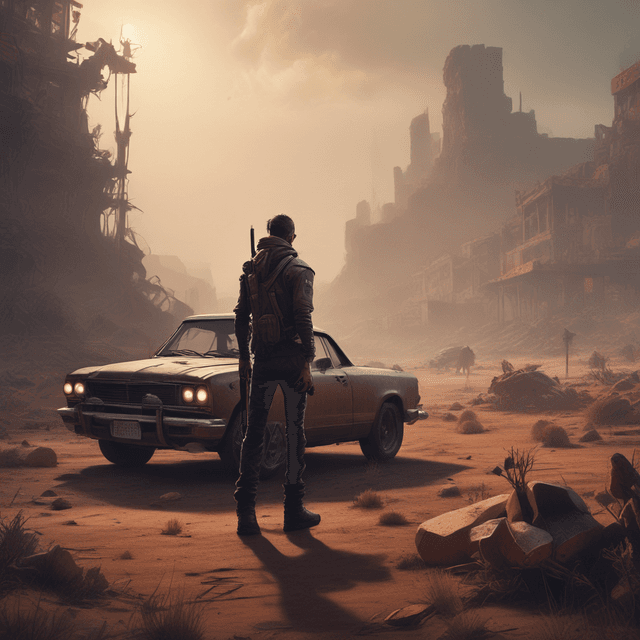
Balatro is a pioneering open-world survival/adventure game developed in 1991 by the independent studio Nighthawk Interactive. Set in a gritty, post-nuclear apocalypse, the game casts players as a nameless protagonist fighting to survive in a harsh, lawless world.
In the late 1980s, the United States and Soviet Union engaged in a series of escalating conflicts that ultimately culminated in a full-scale nuclear war. Millions perished in the initial blasts, and the resulting environmental devastation rendered much of the country uninhabitable.
In the decades since, small pockets of humanity have struggled to rebuild, but the majority of the former United States has descended into a state of anarchy. Roaming bands of raiders, mutants, and other threats make the landscape a perilous one for those trying to eke out an existence. The player character is one such survivor, scrounging for resources, fighting to protect themselves, and making difficult moral choices in order to stay alive.
Balatro combines elements of first-person shooter, RPG, and survival gameplay. Players must manage resources like food, water, ammunition and medicine while navigating the open, post-apocalyptic world. Encounters with hostile NPCs, mutated creatures, and natural dangers require strategic combat, with a variety of firearms and improvised weapons available.
The protagonist can interact with other survivors, taking on quests and tasks that often present them with morally ambiguous choices. These decisions, which can have profound consequences on the game world and its inhabitants, are a core part of the Balatro experience. Players are faced with dilemmas like whether to steal from a struggling community, sacrifice an ally to escape a dangerous situation, or even resort to cannibalism to stave off starvation.
The expansive, seamless world of Balatro is rendered in an atmospheric, gritty visual style with a haunting ambient soundtrack. Exploration is rewarded with the discovery of valuable resources, new locations, and fragments of the game's backstory told through environmental storytelling.
Upon its release, Balatro received critical acclaim for its immersive worldbuilding, compelling gameplay loop, and its exploration of mature, morally ambiguous themes. Many praised the game's refusal to provide clear-cut "right" or "wrong" answers, challenging players to grapple with the harsh realities of survival in a post-apocalyptic landscape.
However, the game also attracted significant controversy, with some critics and parent groups decrying its graphic violence, drug use, and other adult content. Balatro was frequently cited as an example of the growing trend towards "moral ambiguity" in video games, a development that some saw as disturbing.
Despite the controversy, Balatro developed a devoted cult following, with players drawn to its uncompromising vision and the depth of its narrative. Several sequels were produced over the following years, expanding the game's world and lore. While never achieving mainstream blockbuster status, the Balatro series is considered a landmark in the evolution of open-world and morally complex game design, paving the way for later titles that would explore similar themes.
Today, Balatro remains a touchstone for discussions around the boundaries of video game content and storytelling. Its influence can be seen in the work of many modern developers who have sought to push the medium in more mature, ethically ambiguous directions. The game's legacy continues to be debated and dissected by scholars, critics, and players alike.
